Li Auto’s Layout in Electrification, Connectivity, Intelligence and Sharing and Strategy Analysis Report, 2023-2024
Li Auto overestimates the BEV market trend and returns to intensive cultivation.
In the MPV market, Denza D9 DM-i with the highest sales (8,030 units) in January 2024 is a hybrid electric vehicle (HEV) model. Among the top ten new energy models, Trumpchi E8 PHEV (3,470 units) and Voyah Dreamer PHEV (3,208 units) are also HEV models.???
In 2023, the sales of battery electric vehicle (BEV) models in Chinese market jumped by 24.6% year on year, plug-in hybrid electric vehicle (PHEV) models by 84.7%, and extended-range electric vehicle (EREV) models by 181%. It is absolutely clear which technology route is more accepted by current users. It stands to reason that Li Auto, which is best at EREVs, should launch all-electric and extended-range editions of MEGA simultaneously.???????
Why no extended-range edition?
Li Auto's official answer is: “only built on advanced BEV architecture can we get the optimal MPV space solution we think. The space potential of MPVs has already been exploited under existing fuel-powered vehicle architectures. Assuming Li MEGA is an extended-range MPV, the space for components like range extender and fuel tank must be reserved, so there is no way to fully release the space and the styling will not be perfect either. To produce a qualitative change in interior space, the only path is all-electric.”?????
“Li MEGA is based on Li Auto’s high-voltage BEV platform and packs Li Auto-CATL Qilin 5C battery, with a CLTC range of 710km and a cruising range of 500km in the fastest 12-minute charge. We are accelerating the construction of the 5C supercharging network, turning supercharging stations into an important configuration of all-electric products including Li MEGA and a range extender for BEV models.”
This explanation is slightly far-fetched. It can be said that Li MEGA is an idealistic product that is far from the actual needs of the public, leading to lower-than-expected MEGA sales.??
Facing the setback, Li Xiang introspected. He emphasized that Li MEGA is in the stage of 0 to 1 (commercial verification period) rather than 1 to 10 (boom period),so he lowered the sales expectation of the whole company which then began to enter the stage of proceeding steadily and step by step and making solid progress.??
In 2024, Li Auto starts large-scale deployment of super-fast charging stations, building more than 2,000 in cities in 2024 and 3,000 in 2025. It will also build 700 supercharging stations on highways in 2024.
In contrast, NIO, an OEM with the most charging stations, has already built 3,740 charging stations and 2,375 battery swap stations nationwide as of March 2024. NIO plans to build 1,000 new battery swap stations (equivalent to Li Auto's supercharging stations) in 2024. It is clear that well-funded Li Auto is more aggressive.??
Frequently push OTA updates and return to intensive cultivation?
Li Auto pushes OTA updates frequently, with a major upgrade to version 5.0 in late 2023, making owners feel as if they’ve gotten a new car.
On March 27, 2024, Li Auto announced that L Series and Li MEGA will start OTA 5.1 push, adding 41 new highlights such as:
?Add IVI hotspot and wireless screen projection
?Add HUD digital rearview mirror image
?Further enhance AEB recognition capabilities and usable scenarios
?Recognize obstacles, e.g., water-filled barriers and construction signs
?Support braking at a maximum speed of 90km/h.
?Freely select intelligent parking from left, center or right?
?Add a full-view driving recorder: five-way viewing angle, 24-hour simultaneous recording
?Enhance truck avoidance function of highway NOA
?Enhance roundabout function of urban NOA
?Add Tuning Master and Task Master Square
?Add second-row sitting position memory
Continuously optimize the management system to maintain team combat effectiveness
In the first few years of start-up, Li Auto was not the most advanced in technology. However, relying on strong product definition capabilities and organizational management capabilities, Li Auto’s team has boasted combat effectiveness stronger than other emerging automakers (except Huawei AITO), and the car sales of a single store is often more than twice that of other emerging automakers.?
For example, to cope with the long-cycle characteristics of the automotive industry, Li Auto upgraded its employee assessment content from OKR to PBC after sales increased. Original performance assessment ratio and assessment cycle were changed accordingly, with the assessment ratio changed from “262” to “271”.???
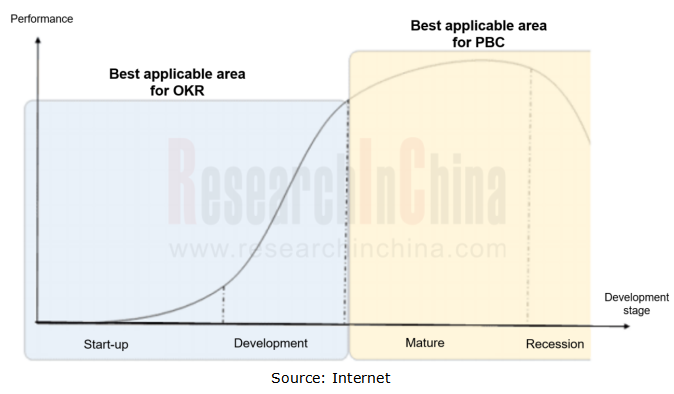
“271” reduces the proportion of unqualified employees in performance assessment, which is theoretically friendlier than the previous appraisal system. However, under the new system, the performance assessment cycle has been adjusted to half a year. If both assessment cycles are rated "I/F", it will mean that the employee is more likely to be laid off. Li Auto said that the purpose of lengthening the assessment cycle is to match the automotive industry that has performance output characteristics of long term and complex business, and make employees focus on long-term contributions, while appropriately reducing management costs and lowering the ratio of last places.??
?
To have the ability to develop multiple models simultaneously, Li Auto introduced the IPD (Integrated Product Development) process from Huawei. Its core is PDT (Product Develop Team), which is responsible for the commercial success and the entire process of a car from definition to sales. The benefit offered by the IPD process is that the company has highly unified ideas in the processes of product definition, design, development and marketing. Li Auto started piloting the matrix management mode from IPD in 2021 and established the first horizontally organized product department.????
Li Auto transformed from a “vertical functional organization” to a “matrix organization” in December 2022, shifting from concentrating all efforts in one place to synchronously coordinating efforts at multiple points. Li Auto will fully start a matrix organization from 2023 to 2025. Based on two horizontal entity departments of strategy and product, five new departments including business, supply, process, organization, and finance will be added to ensure the quality of full-process management. In April 2023, Li Auto added another two departments: one is "CFO Office", where CFO Li Tie is responsible for process, organizational, and financial changes; the other is "Sales and Service Group", headed by former Huawei executive Zou Liangjun which mainly manages sales, delivery, after-sales and charging networks, and reports to Li Xiang.
In September 2023, Li Auto established a capacity delivery team for each manufacturing plant (including Changzhou, Beijing, and range extender plants), which runs through R&D, manufacturing, supply, procurement, and delivery links.?
Precisely because of excellent internal management and external supply chain management, Li Auto does not have big problems with production capacity expansion, ensuring the delivery surged from 132,000 cars in 2022 to 376,000 units in 2023.?
Automotive Microcontroller Unit (MCU) and Application Scenario Research Report, 2026
Automotive MCU Research: Increased demand for redundant security drives ASIL D-compliant MCU shipments to exceed 100 million units
In a vehicle EEA, MCUs are widely distributed in various functional ...
China Intelligent Cockpit Patent Analysis Report, 2026
Intelligent Cockpit Patent Research: Cockpit AI, In?vehicle Health, and Infotainment Are Upgrade to Scenario?based and Proactive Functions
From a patent perspective, this report explores the cutting?...
Research Report on Application of VLA Large Model in Automobiles and Robots, 2026
Research on Automotive and Robot VLA: Hybrid Architectures Become Mainstream, VLA Integrates with General World Models, and Reinforcement Learning Serves as Core Engine
Vision?Language?Action (VLA) m...
China Charging Infrastructure (Supercharging, Battery Swapping, V2G, etc.) and High-Performance Supercharging Battery Research Report, 2026
Charging and battery swapping research: as 5C+ supercharging vehicle models go into mass production, the pace of OEMs self-building supercharging networks quickens
800-1000V high-voltage platforms ar...
China Passenger Car Electronic Controlled Suspension Industry Report, 2026
Electronic Controlled Suspension Industry Research: As the First Year of Full Active Suspension Unfolds, Three Technical Routes Race Forward
1. Penetration Rate Surges Three Times, and Electronic Con...
Intelligent Driving SoC Research Report, 2026
Research on Intelligent Driving SoCs: Competition Focus Shifts to L3/L4 Embedded Hardware, and Computing Power of Flagship Vehicle Models Exceeds 1,000 TOPS
In terms of intelligent driving system in...
Automotive AI Large Model Technology Research Report, 2026
Automotive AI Large Model Research: Competition Shifts from "Who Has the Stronger Model" to "Who Boasts Higher Link Efficiency"
ResearchInChina released the Automotive AI Large Model Technology Resea...
Intelligent Vehicle Cockpit Domain Controller Research Report, 2026
Cockpit domain controller research: L3 AIDV intelligent cockpit domain controllers are entering a boom period
Driven by multiple factors such as the continuous evolution of the automotive central int...
Automotive Acoustic System (Audio, Multi-Channel) Industry Report, 2026
Automotive Acoustics Research: Multiple Channels, AI Tuning, and Self-Developed Algorithms Drive the Transformation of High-End Cockpit Sound Fields
I. Automotive Audio Hardware Solutions with 6–9 S...
Autonomous Driving Sensor Chip Research Report, 2026
Research on Autonomous Driving Sensor Chips: Deeply Perceiving the Physical World, Sensor Chips Are Playing A “Leading Role” in Intelligence
In 2026, the autonomous driving sensor chip industr...
Passenger Car Corner Module and Wheel‑Side Control System Research Report, 2026
Wheel-side control research: the “last mile” chassis innovation
Wheel-side control dismantles the traditional drive, braking, steering, and suspension control of the chassis from a "centralized" styl...
Embodied Artificial Intelligence (& Humanoid Robot) MCU Research Report, 2026
Research on Humanoid Robot MCUs: Evolution from General-Purpose Control to High-Value Dedicated Chip Solutions Integrated with Edge AI Functions
MCU (Microcontroller Unit) refers to a compact integra...
Intelligent Vehicle Zone Control Unit (ZCU) Research Report, 2026
ZCU Research: Cross-domain integrated ZCUs are becoming the edge computing nodes of the next-generation zonal architecture
Currently, the mainstream zonal architecture is mainly the quasi-central + z...
Automotive Cybersecurity and Data Security Research Report, 2026
Cybersecurity & Data Security Research: Intelligent Connected Vehicles Enter the Era of “Systematic Offense-Defense and AI-Defined Security”.
Centering on the panorama of intelligent connect...
Report on Breakthrough Strategies of OEMs and ADAS Tier 1 Suppliers for Overseas Layout of Intelligent Driving, 2026
Regulatory Breakthrough, Local System Establishment, OEMs Competing for NOA Layout: Overall Trends of China’s Intelligent Driving Overseas Layout in 2026
Research on overseas intelligent driving layo...
OEMs and Tier1s’ Intelligent Cockpit Platform (Hardware and Software) Innovation Strategy Research Report, 2026
Intelligent Cockpit Platform Research: multi-dimensional cockpit system architecture reconstruction for multi-agent collaboration and proactive intelligent services
The intelligent cockpit software s...
Automotive AIOS Research Report, 2026
Automotive AIOS Research: Mass Production Solutions Are Implemented
Mass Production Solutions Are Implemented on A Small Scale.
In 2026, AIOS starts small-scale implementation, helping to improve v...
Automotive Telematics Service Provider (TSP) Research Report, 2026
TSP Research: Leading providers collectively turn to AI agents to provide all-scenario active services
Telematics Service Providers (TSPs) are the core hub of the telematics industry chain, connectin...