Research on Roadside Perception: With Greater Policy Support, the RMB10 Billion Intelligent Roadside Perception Market Takes Off
In our Smart Road: Intelligent Roadside Perception Industry Report, 2020, we analyze policies, industry chain and technologies, market size, business model and suppliers in the intelligent roadside perception industry (including RSU, roadside sensor, MEC and cloud control platform).
With the advancement of cooperative vehicle infrastructure system, China and the industry have come to know that the priority should be given to coordinated development between infrastructure and vehicle more than just vehicle. A plurality of policies was issued for intelligent road construction in China in 2020 alone. Wherein, the Guiding Opinions on Promoting the Construction of New Infrastructures for Transportation released in August 2020 makes it clear that ubiquitous perception facilities should be pervasive enough in the transportation industry; the Guide for Layout of Internet of Vehicles (IoV) Roadside Facilities, an association standard concerning roadside facilities published in August 2020, specifies layout of IoV roadside facilities in the C-V2X-based IoV traffic circumstance, and further promotion of roadside and cloud equipment to be unified.
With policy support, China’s intelligent roadside perception market (including radar, camera, etc.) is proliferating fast and is expected to be worth RMB40 billion by 2025. In the market, LiDAR costs the most in deployment, with a single set even priced up to tens of thousands of yuan. Yet LiDAR performs much better in roadside scenarios, notably complex intersections, for it could recognize target attributes precisely and offer far more accurate, reliable data combining with cameras. LiDAR is still at the start of application in roadside end and has yet to be used massively. If deployed on a large scale, the price of LiDAR will take a nosedive.
Intelligent roadside facilities: enormous social benefits fascinate government to invest
Core sensors of an autonomous vehicle that offer limited detection range, is far from meeting the needs for non-line-of-sight perception of surroundings, e.g., ultra long distance, intersections and blind spots. Intelligent roadside perception is thus needed to broaden the detection range around a vehicle and make autonomous driving safer and more reliable.
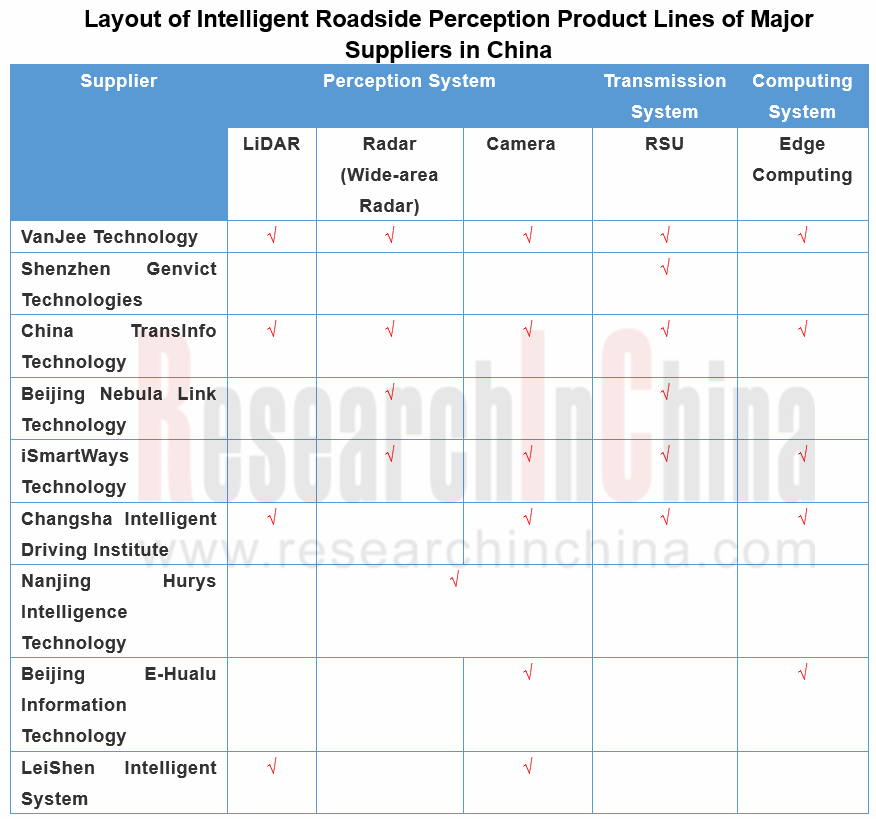
In current stage, roadside perception devices are led by camera, LiDAR and radar. Players like VanJee Technology Co., Ltd., China TransInfo Technology Co., Ltd. and Changsha Intelligent Driving Institute Ltd. have made sound deployments in roadside perception system, with product lines covering three systems (perception, transmission and computing). During the layout, roadside perception devices can be directly mounted on traffic light poles, intelligent poles and other facilities.
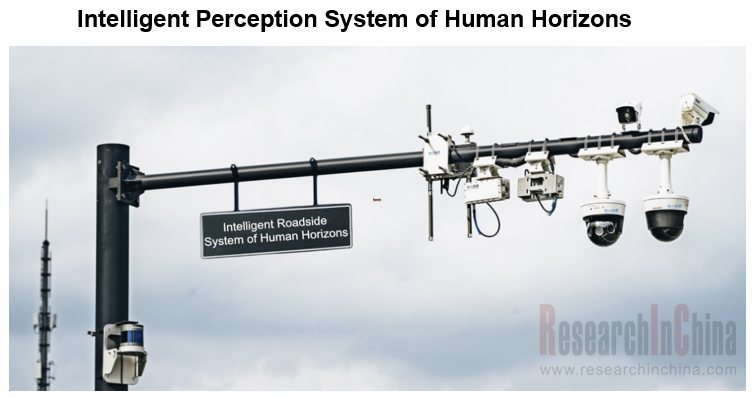
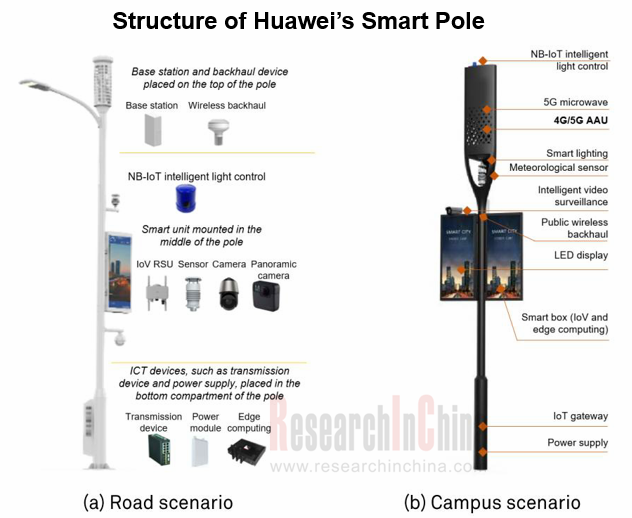
For single perception devices have some limitations, Chinese vendors are vigorously developing multi-sensor fusion solutions which perceive richer road environment information more accurately around the clock. Examples include VanJee Technology Co., Ltd. who already begins to work on data fusion between roadside 3D LiDARs and cameras to cover the drawbacks of LiDAR for greater ability to perceive.
Through the lens of commercial use, pilot roadside infrastructures constructed for demonstration nationwide have generated a mass of data, which is a solution to some technological problems. For example, the First Section (radars and cameras deployed every 250 meters) of Shanghai-Hangzhou-Ningbo Intelligent Expressway has made its pilot run for half a year, bringing about 8% faster average speed, a 20% increase in traffic capacity, a 10% reduction in congestion time, 90% accuracy in travel time forecast, a 10% fall in driving accidents, and a 10% cut in rescue time. It follows that intelligent roadside equipment could produce so obvious social benefits that government is more willing to construct for commercial use on large scale.
Business model: Application in specific scenarios will go first
After exploration, it is found that application in scenarios is an efficient model to develop intelligent roadside perception equipment. In the long-cycle market, pilot application first in specific commercial scenarios remains more efficient. Demonstration products such as intelligent perception and integrated smart traffic poles on intelligent highways and at city crossroads have been introduced successively.
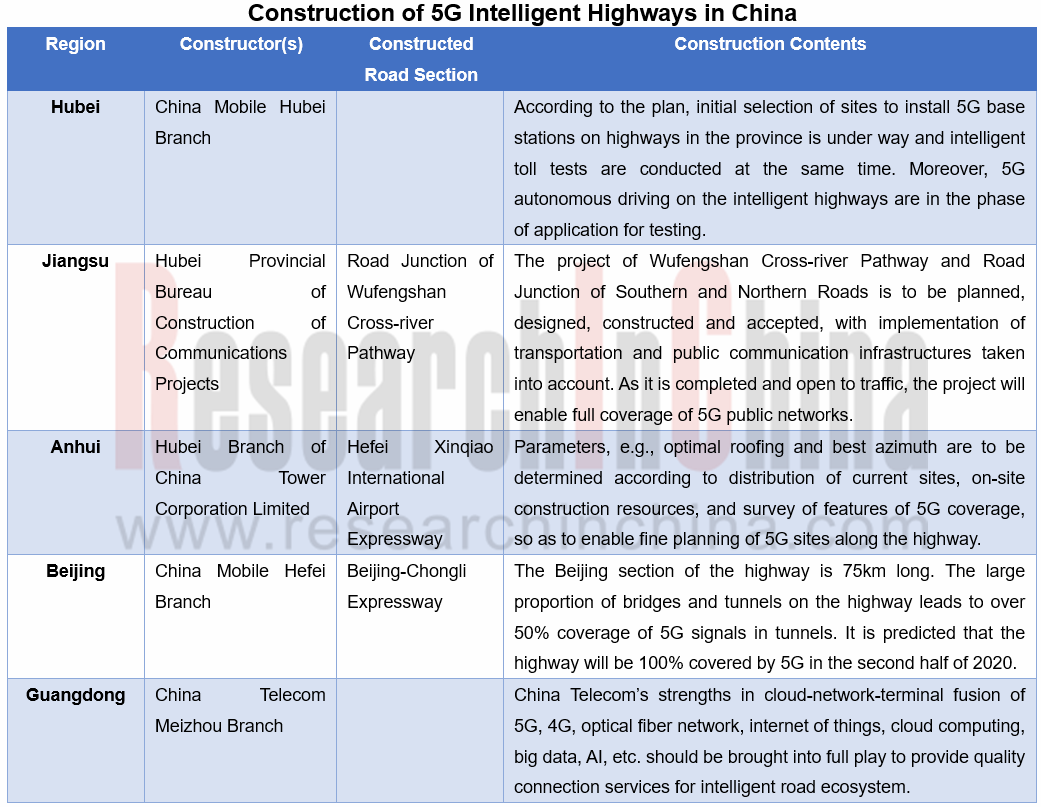
In July 2020, Ezhou Airport Expressway, Hubei’s first intelligent highway invested and constructed by Hubei Provincial Communications Investment Group Co., Ltd., started construction, with a video detector installed every 150 meters on both sides of the road.
In July 2020, China’s first 5G multifunctional demonstration highway pole (Pole No.: K72+455) was installed on the Shenzhen Section of Guangshen Expressway. Every pole can carry such intelligent hardware as 5G base station, intelligent light, video surveillance system, emergency broadcaster and meteorological monitor.
IT giants race to enter
Evolvement of cooperative vehicle infrastructure system (CVIS) is decided by use of roadside equipment. Amid the rising penetration of intelligent roadside perception systems, the intelligent transportation network will be built up to further improve operational efficiency of cities and roads with technologies from edge computing to cloud control. Intelligent roadside perception system is a foundation for development of intelligent transportation.
Additionally, widespread layout of intelligent roadside equipment will drag down installation cost of vehicle V2X devices and push up their penetration. Only sound development of CVIS may make L4/L5 automated driving a reality.
IT tycoons like Huawei and BAT (Baidu, Alibaba and Tencent) who are bullish about the prospect of intelligent roadside equipment, scramble to march into the market.
Baidu focuses on research and development of roadside perception capabilities that meet needs of autonomous driving scenarios and fuse with V2X roadside perception information offered by the vehicle autonomous driving system. In the first half of 2020, Baidu has won the biddings for intelligent transportation projects in Nanjing, Hefei, Yangquan, Chongqing, to name a few.
Alibaba remains superior in infrastructure end, with Cainiao Alliance and ET City Brain. The giant will develop vehicle-infrastructure cooperation using technologies such as Alibaba Cloud Control Platform, AliOS and intelligent roadside facilities.
Tencent has a plan to expedite edge computing equipment installations and to build an open source platform for edge computing together with several partners.
Huawei makes concurrent efforts on vehicle and infrastructure ends, having rolled out products like roadside unit, EI-based Traffic Intelligent Twins, and OceanConnect intelligent transportation platform.
Autonomous Driving Domain Controller and Central Computing Unit (CCU) Industry Report, 2026
Autonomous Driving Domain Controller (ADCU) Research: One-Chip CCU solutions are quickly available in vehicles
In China's passenger car market, autonomous driving systems involved in mass production ...
Automotive EMS and ECU Industry Research Report, 2026
Automotive EMS Research: The boundaries between EMS providers and Tier1 suppliers are becoming blurred, and the supply chain model is evolving from a linear chain to a networked structure
Mainstream ...
Automotive Microcontroller Unit (MCU) and Application Scenario Research Report, 2026
Automotive MCU Research: Increased demand for redundant security drives ASIL D-compliant MCU shipments to exceed 100 million units
In a vehicle EEA, MCUs are widely distributed in various functional ...
China Intelligent Cockpit Patent Analysis Report, 2026
Intelligent Cockpit Patent Research: Cockpit AI, In?vehicle Health, and Infotainment Are Upgrade to Scenario?based and Proactive Functions
From a patent perspective, this report explores the cutting?...
Research Report on Application of VLA Large Model in Automobiles and Robots, 2026
Research on Automotive and Robot VLA: Hybrid Architectures Become Mainstream, VLA Integrates with General World Models, and Reinforcement Learning Serves as Core Engine
Vision?Language?Action (VLA) m...
China Charging Infrastructure (Supercharging, Battery Swapping, V2G, etc.) and High-Performance Supercharging Battery Research Report, 2026
Charging and battery swapping research: as 5C+ supercharging vehicle models go into mass production, the pace of OEMs self-building supercharging networks quickens
800-1000V high-voltage platforms ar...
China Passenger Car Electronic Controlled Suspension Industry Report, 2026
Electronic Controlled Suspension Industry Research: As the First Year of Full Active Suspension Unfolds, Three Technical Routes Race Forward
1. Penetration Rate Surges Three Times, and Electronic Con...
Intelligent Driving SoC Research Report, 2026
Research on Intelligent Driving SoCs: Competition Focus Shifts to L3/L4 Embedded Hardware, and Computing Power of Flagship Vehicle Models Exceeds 1,000 TOPS
In terms of intelligent driving system in...
Automotive AI Large Model Technology Research Report, 2026
Automotive AI Large Model Research: Competition Shifts from "Who Has the Stronger Model" to "Who Boasts Higher Link Efficiency"
ResearchInChina released the Automotive AI Large Model Technology Resea...
Intelligent Vehicle Cockpit Domain Controller Research Report, 2026
Cockpit domain controller research: L3 AIDV intelligent cockpit domain controllers are entering a boom period
Driven by multiple factors such as the continuous evolution of the automotive central int...
Automotive Acoustic System (Audio, Multi-Channel) Industry Report, 2026
Automotive Acoustics Research: Multiple Channels, AI Tuning, and Self-Developed Algorithms Drive the Transformation of High-End Cockpit Sound Fields
I. Automotive Audio Hardware Solutions with 6–9 S...
Autonomous Driving Sensor Chip Research Report, 2026
Research on Autonomous Driving Sensor Chips: Deeply Perceiving the Physical World, Sensor Chips Are Playing A “Leading Role” in Intelligence
In 2026, the autonomous driving sensor chip industr...
Passenger Car Corner Module and Wheel‑Side Control System Research Report, 2026
Wheel-side control research: the “last mile” chassis innovation
Wheel-side control dismantles the traditional drive, braking, steering, and suspension control of the chassis from a "centralized" styl...
Embodied Artificial Intelligence (& Humanoid Robot) MCU Research Report, 2026
Research on Humanoid Robot MCUs: Evolution from General-Purpose Control to High-Value Dedicated Chip Solutions Integrated with Edge AI Functions
MCU (Microcontroller Unit) refers to a compact integra...
Intelligent Vehicle Zone Control Unit (ZCU) Research Report, 2026
ZCU Research: Cross-domain integrated ZCUs are becoming the edge computing nodes of the next-generation zonal architecture
Currently, the mainstream zonal architecture is mainly the quasi-central + z...
Automotive Cybersecurity and Data Security Research Report, 2026
Cybersecurity & Data Security Research: Intelligent Connected Vehicles Enter the Era of “Systematic Offense-Defense and AI-Defined Security”.
Centering on the panorama of intelligent connect...
Report on Breakthrough Strategies of OEMs and ADAS Tier 1 Suppliers for Overseas Layout of Intelligent Driving, 2026
Regulatory Breakthrough, Local System Establishment, OEMs Competing for NOA Layout: Overall Trends of China’s Intelligent Driving Overseas Layout in 2026
Research on overseas intelligent driving layo...
OEMs and Tier1s’ Intelligent Cockpit Platform (Hardware and Software) Innovation Strategy Research Report, 2026
Intelligent Cockpit Platform Research: multi-dimensional cockpit system architecture reconstruction for multi-agent collaboration and proactive intelligent services
The intelligent cockpit software s...