|
 |
China Passenger Car Camera Market Report, 2019Q2
|
 
Passenger Car Camera Market: Front-view Monocular Camera Installations Soared by 104% in 2019Q2 from the Same Period of Last Year.
In the first half of 2019, around 10.89 million cameras were installed in new passenger cars in China, a year-on-year upsurge of 19.93%, among which monocular camera grew faster than others, with installations soaring by a hefty 104% in 2019Q2 on a like-for-like basis, compared with a growth rate of 71.7% in 2019Q1, according to our recent report -- China Passenger Car Camera Market Report, 2019Q2.
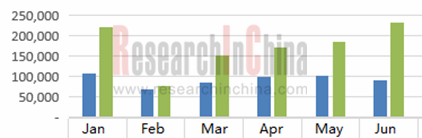
In 2019Q2, the top three players Bosch, Aptiv and Valeo seized shares of 23.7%, 18.9% and 16.6% in the Chinese passenger car front-view monocular camera market, respectively. Bosch and Valeo witnessed a faster growth rate than other vendors.
A long postponement in mass production of highly automated driving systems saves major suppliers energy for application of L2 and L2.5. Even for L2, OEMs’ actual progress is a reminder that the technology is still unavailable to a range of scenarios. For example, Attention Assist and Traffic Sign Assist of 2019 new Maybach models and Toyota’s Pre-collision System cannot work under the following conditions.
Attention Assist
Maybach Attention Assist works at speeds between 60 km/h and 200 km/h: it is able to recognize signs of driver fatigue or distraction, and prompts the driver to take a break.
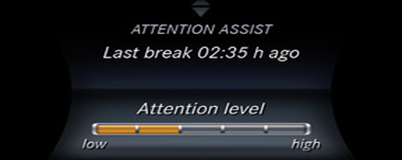
The ATTENTION ASSIST will be not fully exerted, and warnings may be delayed or not occur at all in the following situations:
If the driver has been driving for less than 30 minutes.
If the road condition is poor (uneven road surface or potholes).
If there is a strong side wind.
If the driver adopts a sporty driving style (high cornering speeds or high rates of acceleration).
If the driver drives at speeds between 60 km/h and 200 km/h.
If the Steering Pilot function of DISTRONIC is active.
If the time is set incorrectly.
In active driving situations, if the driver changes lanes and vary their speed frequently.
Traffic Sign Assist
Traffic Sign Assist detects traffic signs with versatile camera and assists the driver by displaying detected speed limits and overtaking restrictions in the instrument cluster. If the system detects that users are driving onto a section of road in the wrong direction, it triggers a warning. A camera on the inside of the windscreen is able to identify road signs at the road side. Data stored in navigation system and general traffic rules are also used to estimate the current speed.
When the vehicle travel through related traffic signs, its speed limit and overtaking restriction will be updated. The system can update the display in the following situations without detecting traffic signs:
When the vehicle changes roads, e.g. freeway exit or ramp
When driving through a village or town borders which are stored in the digital map
When traffic signs the camera detected last time are not there
End sign of restrictions (speed limit or overtaking) will be displayed 5 seconds after the vehicle passes over. Traffic rules available to the current condition will be still displayed on the assist system.
The camera also detects traffic signs with a restriction indicated by an additional sign (e.g. in wet conditions). Only in the following situations can these signs be displayed:
When restriction rules must be complied with, or
When the Traffic Sign Assist system is unable to determine whether restrictions are available or not, speed limits will not be displayed on the instrument cluster if not known from any sources.
The system may be either functionally impaired or temporarily out of work in the following situations:
If there is poor visibility, e.g. due to rain, snow, fog or spray
If there is glare, e.g. from the sun being low in the sky
If there is dirt, ice or misting on the windscreen in the area of the camera
If the traffic signs are hard to detect, e.g. due to dirt, ice or snow
If there is inadequate lighting of the traffic signs at night
If the signs are blurry, e.g. traffic signs on construction sites or in adjacent lanes
If the information in the digital street map of the navigation system is incorrect or out of date
Toyota Pre-collision System (PCS)
Toyota’s Pre-Collision System (PCS) renders an in-vehicle camera and laser to detect pedestrians and other vehicles in front of the vehicle. If it determines possibility of a frontal collision, the system will prompt the driver to take action and avoid it with audio and visual alerts. If the driver notices the potential collision and apply the brakes, the Pre-Collision System with Pedestrian Detection (PCS w/PD) may apply additional force using Brake Assist (BA). If the driver fails to brake in time, it may automatically apply the brakes to reduce the vehicle’s speed, helping to minimize the likelihood of a frontal collision or reduce its severity.
In some situations (such as the following), a vehicle/pedestrian may not be detected by the radar and camera sensors, thus preventing the system from operating properly.
When an oncoming vehicle approaches
When the preceding vehicle is a motorcycle or a bicycle
When approaching the side or front of a vehicle
If a preceding vehicle has a small rear end, such as an unloaded truck
If a preceding vehicle has a low rear end, such as a low bed trailer
When the preceding vehicle has high ground clearance
When a preceding vehicle is carrying a load which protrudes past its rear bumper
If a vehicle ahead is irregularly shaped, such as a tractor or sidecar
If the sun or other light is shining directly on the vehicle ahead
If a vehicle cuts in front of your vehicle or emerges from beside a vehicle
If a preceding vehicle ahead makes an abrupt maneuver (such as sudden swerving, acceleration or deceleration)
When a sudden cut-in occurs behind a preceding vehicle
When a preceding vehicle is not right in front of your vehicle
When driving in bad weather such as heavy rain, fog, snow or a sandstorm
When the vehicle is hit by water, snow, dust, etc. from a vehicle ahead
When driving through steam or smoke
When amount of light changes dramatically, such as at a tunnel exit/entrance
When a very bright light, such as the sun or the headlights of oncoming vehicle, beat down the camera sensor
When driving in low light (dusk, dawn, etc.) or when driving without headlights at night or in a tunnel
After the hybrid system has started and the vehicle has not been driven for a certain period of time
While making a left/right turn and within a few seconds after making a left/right turn
While driving on a curve, and within a few seconds after driving on a curve
If your vehicle is skidding
If the front of the vehicle is raised or lowered
If the wheels are misaligned
If the camera sensor is blocked (by a wiper blade, etc.)
If your vehicle is wobbling
If your vehicle is being driven at extremely high speeds
While driving up or down a slope
When the camera sensor or radar sensor is misaligned
In some situations (such as the following), braking force may be not enough to make PCS work normally:
When braking function fails to work normally due to undercooled, overheated or wet braking parts
When the vehicle is maintained improperly (brake/tires over worn, abnormal tire pressure, etc.)
When the vehicle travels on gravel roads or other slippery roads
PCS should be disabled when radar and camera sensor may not recognize a pedestrian in the following circumstances:
When a pedestrian is 1m or shorter or 2m or taller
When a pedestrian wears oversized clothing (a rain coat, long skirt, etc.), obscuring the pedestrian’s silhouette
When a pedestrian carries large baggage, holds an umbrella, etc., hiding part of the body
When a pedestrian leans forward or squats
When a pedestrian pushes a pram, wheelchair, bicycle or other vehicle
When pedestrians are walking in a group or are close together
When a pedestrian is in white that reflects sunlight and looks extremely bright
When a pedestrian is in the darkness such as at night or while in a tunnel
When a pedestrian has clothing with brightness/color similar to scenery and that blend into the background
When a pedestrian is staying close to or walking alongside a wall, fence, guardrail, vehicle or other obstacle
When a pedestrian is walking on top of metal on the road surface
When a pedestrian walks fast
When a pedestrian abruptly changes walking speed
When a pedestrian runs out from behind a vehicle or a large object
When a pedestrian is very close to a side (external rearview mirror) of the vehicle
ADAS suppliers and OEMs work together on product and technology development to make breakthroughs in so many inapplicable scenarios, so that ADAS can get improved and become safer. All players still have a long way to go before autonomous driving comes true.
1 Chinese Passenger Car Camera Market
1.1 Camera Installations to New Cars, 2019H1
1.2 Front-view Monocular and Stereo Camera Installations to New Cars in China, 2019H1
1.3 Proportion of Front-view Monocular Camera Installations to New Cars by Price and Top 20 Brands by Installations in China, 2019H1
1.4 Top 30 Models by Front-view Monocular Camera Installations to New Passenger Cars in China, 2019Q1-Q2
1.5 Front-view Monocular Camera Suppliers to New Passenger Cars and Their Share by Installations in China, 2019Q2
1.6 Front-view Monocular Camera Suppliers to New Passenger Cars and Their Installations and Share in China, 2018Q1-2019Q2
1.7 Rear-view Camera Installations to New Cars and Growth Rate in China by Reversing Camera and Streaming Rear-view Mirror, 2019H1
1.8 Proportion of Reversing Camera Installations to New Cars by Price and Top 20 Brands by Installations in China, 2019H1
1.9 Monthly Surround-view Camera Installations to New Cars in China, Jan 2018 - Jun 2019
1.10 Proportion of Surround-view System Installations to New Cars by Price and Top 20 Brands by Installations in China, 2019H1
1.11 Side-view Camera Installations to New Cars in China, Jan 2018 - Jun 2019
2 Installations and Dynamics of Automotive Vision Suppliers
2.1 Aptiv
2.1.1 Aptiv’s Front-view Monocular Camera Installations and Share in Chinese Passenger Car Market, 2018Q1-2019Q2
2.1.2 Recent Developments
2.2 Bosch
2.2.1 Bosch’s Front-view Monocular Camera Installations and Share in Chinese Passenger Car Market, 2018Q1-2019Q2
2.2.2 Recent Developments
2.3 Denso
2.3.1 Denso’s Front-view Monocular Camera Installations and Share in Chinese Passenger Car Market, 2018Q1-2019Q2
2.3.2 Recent Developments
2.4 Continental
2.4.1 Continental’s Front-view Monocular Camera Installations and Share in Chinese Passenger Car Market, 2018Q1-2019Q2
2.4.2 Recent Developments
2.5 Valeo
2.5.1 Valeo’s Front-view Monocular Camera Installations and Share in Chinese Passenger Car Market, 2018Q1-2019Q2
2.5.2 Recent Developments
2.6 Veoneer
2.6.1 Veoneer’s Front-view Monocular Camera Installations and Share in Chinese Passenger Car Market, 2018Q1-2019Q2
2.7 ZF-TRW
2.7.1 ZF-TRW’s Front-view Monocular Camera Installations and Share in Chinese Passenger Car Market, 2018Q1-2019Q2
2.7.2 Recent Developments
2.8 HiRain
2.8.1 HiRain’s Front-view Monocular Camera Installations and Share in Chinese Passenger Car Market, 2018Q1-2019Q2
2.8.2 Recent Developments
2.9 Developments of Other Companies
2.9.1 Minieye
2.9.2 Motovis
3 Vision Sensors and Visual ADAS of Chinese Automakers
3.1 Great Wall Motor
3.1.1 Vision Sensor Configuration of Newly-launched Models, 2019Q2
3.1.2 Sales Volume of Models with Front View Monocular Cameras, 2018Q1-2019Q2
3.1.3 Visual ADAS Features of Newly-launched Models, 2019Q2
3.1.4 Representative Models with L2 Features
3.1.5 Sensors and Operation Interface of WEY Cruise Assist System
3.1.6 Features of WEY L2
3.1.7 Possible Failures of WEY L2 System
3.1.8 Profile of WEY Forward Assist System
3.1.9 WEY Forward Assist System: Warning and Braking
3.1.10 WEY Forward Assist System: Target Detection & System Failures
3.1.11 Profile of WEY Lane Assist System
3.1.12 Features & Possible Failures of WEY Lane Centering System
3.2 Geely
3.2.1 Vision Sensor Configuration of Newly-launched Models
3.2.2 Sales Volume of Models with Front View Monocular Cameras, 2018Q1-2019Q2
3.2.3 Features of Xing Yue’s Visual ADAS, 2019Q2
3.2.3 Features of Xing Yue’s Visual ADAS
3.2.4 Configuration of Jia Ji’s ADAS Sensors
3.3 BYD
3.3.1 Vision Sensor Configuration of Newly-launched Models, 2019Q2
3.3.2 Installation Locations of Vision Sensors
3.3.3 Visual ADAS Features of Newly-launched Models
3.4 SAIC Passenger Vehicle
3.4.1 Vision Sensor Configuration of Newly-launched Models, 2019Q1
3.4.2 Sales Volume of Models with Front View Monocular Cameras, 2018Q1-2019Q2
3.4.3 Visual ADAS Features of Newly-launched Models
3.5 Chang'an Automobile
3.5.1 Vision Sensor Configuration of Newly-launched Models
3.5.2 Installation Locations and Features of Visual Sensors
3.5.3 Visual ADAS Features of Newly-launched Models
4 Vision Sensors and Visual ADAS of Joint Venture Brands
4.1 Mercedes Benz
4.1.1 Vision Sensor Configuration of Newly-launched Models, 2019Q1
4.1.2 Visual ADAS Features of Newly-launched Models
4.1.3 Attention Assist & Traffic Sign Assist
4.1.4 Representative Models with L2 Features
4.1.5 Profile of Intelligent Drive
4.1.6 Settings of Intelligent Drive
4.1.7 Steering Features of Intelligent Drive
4.1.8 Start-up Conditions & Possible Failures of Intelligent Drive
4.1.9 Profile of Active Brake Assist
4.1.10 Features of Active Brake Assist
4.1.11 Possible Failures of Active Brake Assist
4.2 GAC Toyota
4.2.1 Vision Sensor Configuration of Newly-launched Models
4.2.2 Visual ADAS Features of Newly-launched Models
4.2.3 Representative Models with L2 Features
4.2.4 Profile of Pre-Collision System (PCS)
4.2.5 Working Conditions of PCS
4.2.6 Possible Misoperations of PCS
4.2.7 Possible Failures of PCS
4.2.8 Features of LDA
4.2.9 Start-up and Display of LDA
4.2.10 Working Conditions and Other Features of LDA
4.2.11 Possible Failures of LDA
4.3 BMW Brilliance
4.3.1 Vision Sensor Configuration of Newly-launched Models
4.3.2 Visual ADAS Features of Newly-launched Models
4.4 SAIC Volkswagen
4.4.1 Vision Sensor Configuration of Newly-launched Models, 2019Q2
4.4.2 Visual ADAS Features of Newly-launched Models
4.4.3 Representative L2 Models and Configuration
4.4.4 ADAS Sensor Configuration of Teramont
4.4.5 Profile of ACC
4.4.6 Display of ACC
4.4.7 Notes of ACC
4.4.8 Special Driving Environment of ACC
4.4.9 Profile of Front Assist
4.4.10 Display of Front Assist
4.4.11 Notes of Front Assist
4.4.12 Profile of LKS
4.4.13 Display of LKS
4.5 SAIC-GM
4.5.1 Vision Sensor Configuration of Newly-launched Models
4.5.2 Visual ADAS Features of Newly-launched Models
4.5.3 Cadillac Super Cruise
4.5.4 Buick’s Representative Models with L2 Features
4.5.5 Profile of Buick ACC
4.5.6 Possible Failures of Buick ACC
4.5.7 FAB & IEB & FPB of Buick
4.5.8 Possible Failures of Buick FAB & FPB
4.5.9 Buick LKA
4.6 FAW-Volkswagen
4.6.1 Vision Sensor Configuration of Newly-launched Models
4.6.2 Visual ADAS Features of Newly-launched Models
4.7 Dongfeng Yueda Kia
4.7.1 Vision Sensor Configuration of Newly-launched Models
4.7.2 Visual ADAS Features of Newly-launched Models
4.7.3 Adaptive Headlamp System
4.8 Chery Jaguar Land Rover
4.8.1 Vision Sensor Configuration of Newly-launched Models
4.8.2 Visual ADAS Features of Newly-launched Models
4.9 Ford
4.9.1 Vision Sensor Configuration of Newly-launched Models
4.9.2 Visual ADAS Features of Newly-launched Models
4.9.3 Representative Models with L2 Features
4.9.4 Profile of Pre-Collision Assist
4.9.5 Distance Warning & Prompt
4.9.6 Profile of Lane Centering System
4.9.7 Modes of Lane Centering System
4.9.8 Display of Lane Centering System
4.9.9 Unavailability of Lane Centering System
5 Development Trends of Vision Sensor Industry
AI-Defined Vehicle (AIDV) OEMs' Deployment Strategies Research Report, 2026 AIDV Research: Deployment Strategies of 22 OEMs
The AI-Defined Vehicle (AIDV) OEMs' Deployment Strategies Research Report, 2026, released by ResearchInChina, analyzes the AI deployment strategies of ... OEMs’ Passenger Car Model Planning Research Report, 2026 Vehicle Model Planning Research: Chinese OEMs Launch Sub-Brands Intensively, While Multinational OEMs Apply the Brakes to Electrification Strategies
ResearchInChina released the OEMs’ Passenger Car M... Autonomous Driving Simulation and World Model Research Report, 2026 Autonomous driving simulation research: "Simulation test + world model"-driven test system has become R&D infrastructure.
The "Autonomous Driving Simulation and World Model Research Report, 2026"... Cockpit-Driving Integration Central Domain Controller SoC and AI Supercomputing Architecture Research Report, 2026 Cockpit-Driving integration and AI supercomputing research: The One Chip solution is rapidly installed in vehicles, and AI supercomputing architectures are moving towards full-domain integration.
AI ... Intelligent Driving End-to-End Large Model Research Report, 2026 Research on Intelligent Driving Large Models: A Critical Period for Technological Competition and Paradigm Integration
As autonomous driving technology rapidly iterates from L2 to L3?L4, intelligent... Automotive Digital Key Industry Trend Report, 2026 Digital Key Research: Automotive BLE, UWB and SLE Hardware Layout
The Automotive Digital Key Industry Trend Report, 2026, released by ResearchInChina, analyzes and predicts the digital key market, co... Monthly Report on Automotive New Technology (May 2026) UHD gaze technology, full-color LiDAR, UWB, etc. promote the upgrade of intelligent driving perception capabilities
This report is published once a month and is available for annual subscription.The... In-Cabin Monitoring Systems (DMS, OMS, etc.) Research Report, 2026 In-Cabin Monitoring System Research: DMS to Become Mandatory in 2027, Expected to be Installed in Over 14 Million Vehicles
ResearchInChina released the In-Cabin Monitoring Systems (DMS, OMS, etc.) Re... Automotive Service-Oriented Architecture (SOA) and Cross-Domain Middleware Industry Report, 2026 Research on automotive SOA and cross-domain middleware: The era of AI atomic services and AI cross-domain fusion agents is coming.
Automotive SOA evolves towards AI + full SOA servitization Driv... Automotive Display, Center Console and Cluster Industry Report, 2026 Automotive Display Research: Multi-Screen Application Slows Down, While OLED and MiniLED Are Introduced in Vehicles Quickly
In 2026, automotive displays will no longer excessively pursue the number a... Global and China Intelligent Vehicle Standard System Construction and Certification Research Report, 2026 Intelligent Driving Standards and Certification: With the Maturing Standardization System, China Will Participate in Formulation of Global Standards
China's automotive industry is transforming from ... Automotive Intelligent Diagnosis Industry Report, 2026 Automotive Intelligent Diagnosis Research: Powered by AI, Remote Diagnosis Is Being Upgraded towards Intelligence.
ResearchInChina released the Automotive Intelligent Diagnosis Industry Report, 2026.... Automotive Cloud Service Platform Research Report, 2026 Research on automotive cloud service platform: with architecture upgrade and computing power improvement, cloud services enter a new stage
In 2026, the Internet of Vehicles industry generates petaby... Integrated Battery and Innovative Battery Technology Research Report, 2026 Power Battery Research: Sales of High-Capacity Vehicles Keep Rising, and Solid-State Batteries Begin to Be Installed in Vehicles
I. Sales of High-Capacity Vehicles Sustain Growth, and Those with A C... Chinese Independent OEMs’ ADAS and Autonomous Driving Report, 2026 Research on OEMs' Intelligent Driving: Era of Physical AI, Standard Configuration of D2D, and Initial Exploration of L3 Commercial Pilot Projects
From 2023 to 2025, the intelligent driving installati... Intelligent Vehicle New Technology Application Analysis Report, 2025-2026 New Technology Research: Innovative Products such as Bionic Cameras, Vision-LiDAR Fusion Sensors, Auditory Sensors Further Enhance Vehicle Perception Capabilities
ForewordResearchInChina released th... Automotive Optical Fiber Communication (Optical Fiber Ethernet, PON) and Supply Chain Research Report, 2026 Research on Automotive Optical Fiber Communication: Introduction of Optical Fiber in Vehicles Accelerates, with Priority Deployment in High-Speed Communication Link (10+Gbps) Scenarios
Automotive opt... Automotive Intelligent Cockpit SoC Research Report, 2026 Automotive Cockpit SoC Research: Passenger Cars in the Price Range of RMB100,000–200,000 Account for Nearly 50% of Total Sales, and New-Generation Cockpit SoC Products Largely Enter Mass Production
P...
|