|
 |
Global and China Flying Car Industry Research Report, 2022
|
ResearchInChina has released “Global and China Flying Car Industry Research Report, 2022".
A flying car is a three-dimensional vehicle. Broadly speaking, it is a low-altitude intelligent autonomous transportation tool carrying cargo or people, namely electric vertical take-off and landing (eVTOL). It features electric vertical take-off and landing, intelligent autonomous driving, amphibious transport and so on.
Multi-rotor configuration is the current mainstream
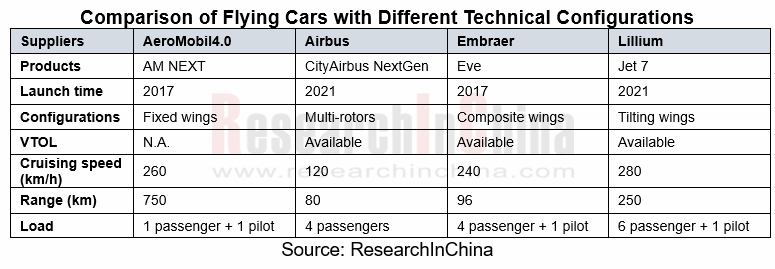
The technical configurations of flying cars mainly include four types: fixed wings, multi-rotors, composite wings and tilting wings. Among them, the most traditional fixed wings are rarely used due to the inability to take off and land vertically and hover. On the market, the most used multi-rotors take off and land vertically, hover precisely, are simple to operate with little technical difficulty, and land quickly. But, they are only suitable for short-distance transportation because of a short range.
In the future, with the improvement of the route network and the growth of long-distance transportation demand, composite wings and tilting wings with longer range and faster cruising speed will gradually become the mainstream.
Around 2025, flying cars will spring up
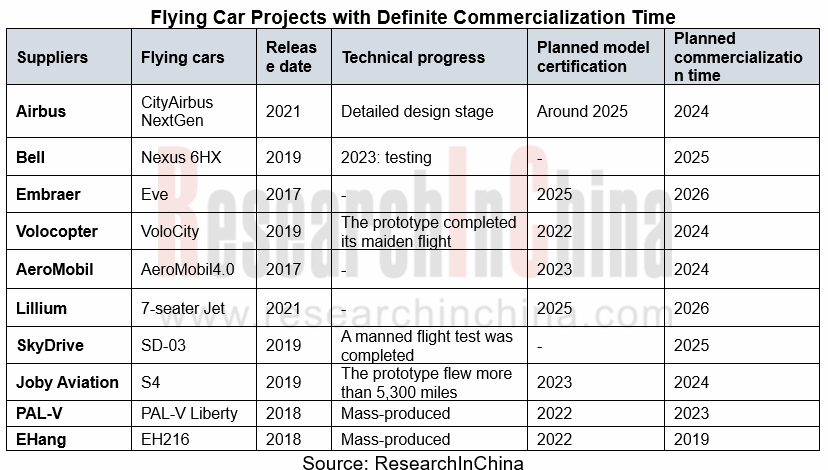
As per the planning announced by vendors, the commercialization of flying cars will happen around 2025. By then, the Paris 2024 Summer Olympics and the Expo 2025 Osaka will be in the global spotlight. Therefore, both Paris and Osaka have deployed flying cars.
The city of Paris hopes to create two dedicated flight paths to ferry passengers for the 2024 Olympics and Paralympics. One route will carry passengers via Paris-Charles de Gaulle and Le Bourget airports, while the second will travel between two suburbs southwest of the French capital.
At present, Volocopter and Airbus have commercial plans for the Paris Olympics. Volocopter successfully flew its electric air taxi ‘helicopter’, the VoloCity, from Le Bourget airport in 2021. Also in 2021, Airbus revealed CityAirbus NextGen, an all-electric, four-seat eVTOL multicopter concept featuring a wing, for the general public during the 2024 Olympic Games.
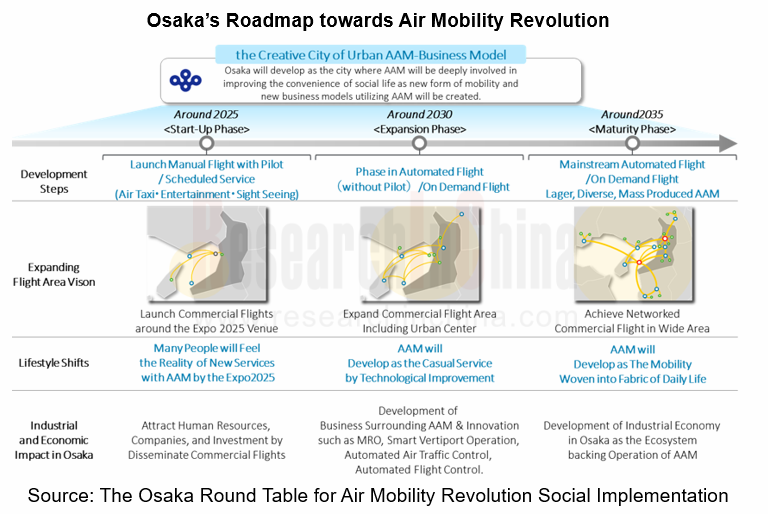
Osaka, Japan has made a very detailed roadmap for the commercialization of flying cars: regular flights will be opened in 2025, routes will be added in 2030, and aircrafts will be larger and diversified in 2035. SkyDrive and Joby Aviation have planned to provide commercial services during the Expo 2025 Osaka (in February 2022, ANA HOLDINGS, INC. and Joby Aviation announced they were forming a partnership that will see Japan's largest airline join with Joby to bring aerial ridesharing services to cities and communities across Japan. Toyota Motor Corporation also joined the partnership).
How do flying cars become possible? The platform operation mode is the prerequisite
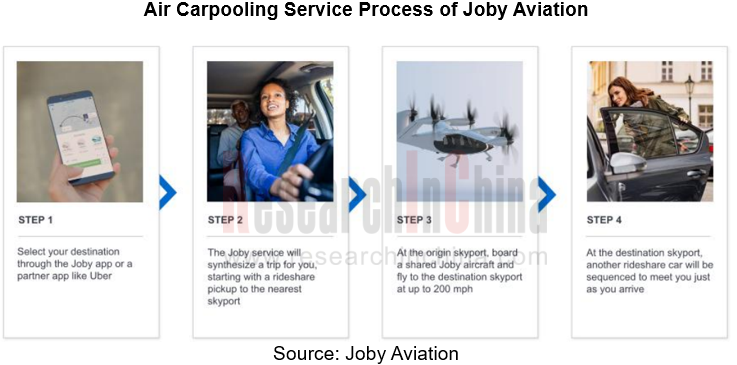
Usually, a flying car costs more than USD300,000 (for instance, PAL-V Liberty sells the standard model, known as the Liberty Sport, for USD399,000). As the automation technology is not yet perfect, most eVTOLs require operators with pilot certificates or pilots. Therefore, the platform operation mode is the main business model in the initial stage.
For example, Joby Aviation plans to launch an App-based air ride-sharing service in 2024. Volocopter also plans a complete air carpooling service process, allowing customers to learn about carpooling services through Volocopter website, app, and VoloPort kiosk before placing orders, enjoying services and then evaluating them. In addition, EHang's carpooling service process includes “finding a suitable route in the APP - selecting a destination - selecting an EHang AAV and making a reservation”.
1. Introduction to Flying Cars
1.1 Definition
1.2 Classification of Flying Cars
1.3 Development History
1.4 Application
1.5 Challenges
1.6 Technical Configuration
1.7 Levels of Autonomous Flying Car Technology
1.8 Development Trends
2. Global and Chinese Flying Car Market
2.1 Market Size
2.2 Laws and Regulations - China
2.3 Laws and Regulations - Europe and America
2.4 Japan's Flying Car Development Planning - National Level
2.4.1 Japan's Flying Car Development Planning - Local Level
2.5 South Korea's Flying Car Development Planning
2.6 Flying Car Development Planning in Europe and America
3. Flying Car Suppliers
3.1 Overview and Analysis
3.2 Boeing
3.2.1 Profile
3.2.2 Development History of Flying Cars
3.2.3 Introduction to Flying Cars
3.2.4 Comparison of PAV and CAV Parameters of Flying Car Prototypes
3.3 Airbus
3.3.1 Profile
3.3.2 Development History of Flying Car Projects
3.3.3 Introduction to Flying Cars
3.3.4 Parameters of Flying Car
3.3.5 Cooperation in Urban Air Mobility (UAM)
3.4 Bell
3.4.1 Profile
3.4.2 Introduction to Flying Cars
3.4.3 Parameter Comparison of Air Taxis
3.4.4 Cooperation and Development Plan in Air Mobility
3.5 Muyu Aero
3.5.1 Profile
3.5.2 Introduction to Flying Cars
3.5.3 Parameters of Flying Cars
3.6 Embraer
3.6.1 Profile
3.6.2 Development History and Planning of Flying Cars
3.6.3 Parameters of Flying Cars
3.6.4 Major Customers
3.6.5 Cooperation
3.7 AVIC
3.7.1 Profile
3.8 Volocopter
3.8.1 Profile
3.8.2 Financing
3.8.3 Development History of Flying Cars
3.8.4 Introduction to Flying Cars
3.3.5 Parameters, Layout and Planning of Flying Cars
3.8.6 Commercialization Operation Plan of Flying Cars
3.8.7 Air Taxi Service Process
3.8.8 eVTOL industry chain
3.8.9 Cooperation
3.9 AeroMobil
3.9.1 Profile
3.9.2 Financing and Development History
3.9.3 Introduction to Flying Cars
3.9.4 Parameters of Flying Cars
3.9.5 Commercialization Cooperation Dynamics and Planning
3.10 Lilium
3.10.1 Profile
3.10.2 Financing
3.10.3 Development History and Planning of Flying Cars
3.10.4 Commercial Operation Plan of Flying Cars
3.10.5 Operation Network Layout of Flying Cars
3.10.6 Introduction of 7-seater Flying Cars
3.10.7 Parameters of Flying Cars
3.11 SkyDrive
3.11.1 Profile
3.11.2 Financing
3.11.3 Development History
3.11.4 Introduction to Flying Cars
3.11.5 Parameters of Flying Cars
3.11.6 Commercialization Roadmap and Cooperation
3.11.7 Partners
3.12 Joby Aviation
3.12.1 Profile
3.12.2 Financing
3.12.3 Development History
3.12.4 Production, Certification and Operation Planning of Flying Cars
3.12.5 Skyport Network Planning and Air Carpooling Service Charges
3.12.6 Air Carpooling Service Process
3.12.7 Introduction to S4
3.3.8 Parameters of S4
3.12.9 Cooperation Dynamics
3.13 PAL-V
3.13.1 Profile
3.13.2 Development History and Planning of Flying Cars
3.13.3 Introduction to Liberty
3.13.4 Parameters of Liberty
3.14 Kitty Hawk
3.14.1 Profile
3.14.2 Development History and Planning of Flying Cars
3.14.3 Flying Car Projects
3.14.4 Parameters of Heaviside H2
3.15 Opener
3.15.1 Profile
3.15.2 Development History and Planning of Flying Cars
3.15.3 Introduction to BlackFly
3.15.4 Parameters of BlackFly
3.16 EHang
3.16.1 Profile
3.16.2 Financing
3.16.3 Main business
3.16.4 Development, Certification and Planning of Flying Cars
3.16.5 Introduction to Flying Cars
3.16.6 Parameters of Autonomous Aerial Vehicles
3.16.7 Commercial Operation of Flying Cars
3.16.8 “100 Air Traffic Routes” Plan
3.16.9 Capacity Eexpansion and Major Customers
3.16.10 Urban Air Mobility Ecosystem Layout
4. OEMs Deploying Flying Cars
4.1 Overview and Analysis
4.2 Geely
4.2.1 Profile
4.2.2 Development History of Transition
4.2.3 Introduction to Flying Cars
3.3.4 Parameters of Flying Cars
4.2.5 Dynamics
4.3 Xpeng
4.3.1 Profile
4.3.2 R&D and Flight Test Base Layout
4.3.3 Development History and Planning
4.3.4 Introduction to Flying Cars
3.3.5 Parameters of Flying Cars
4.3.6 Dynamics
4.4 Hyundai
4.4.1 Profile
4.4.2 Introduction to Flying Cars and Parameters
4.4.3 Future Mobility Vision
4.4.4 Dynamics
4.5 GM
4.5.1 Flying Car Layout Dynamics
4.6 Aston Martin
4.6.1 Flying Car Layout Dynamics
4.7 Porsche
4.7.1 Flying Car Layout Dynamics
4.8 Toyota
4.8.1 Flying Car Layout Dynamics
4.9 Honda
4.9.1 Flying Car Layout Dynamics
4.9.2 Development Capabilities of Flying Cars
4.9.3 Future Mobility Ecosystem Vision
4.10 Suzuki
4.10.1 Flying Car Layout Dynamics
4.11 Daimler
4.11.1 Flying Car Layout Dynamics
AI-Defined Vehicle (AIDV) OEMs' Deployment Strategies Research Report, 2026 AIDV Research: Deployment Strategies of 22 OEMs
The AI-Defined Vehicle (AIDV) OEMs' Deployment Strategies Research Report, 2026, released by ResearchInChina, analyzes the AI deployment strategies of ... OEMs’ Passenger Car Model Planning Research Report, 2026 Vehicle Model Planning Research: Chinese OEMs Launch Sub-Brands Intensively, While Multinational OEMs Apply the Brakes to Electrification Strategies
ResearchInChina released the OEMs’ Passenger Car M... Autonomous Driving Simulation and World Model Research Report, 2026 Autonomous driving simulation research: "Simulation test + world model"-driven test system has become R&D infrastructure.
The "Autonomous Driving Simulation and World Model Research Report, 2026"... Cockpit-Driving Integration Central Domain Controller SoC and AI Supercomputing Architecture Research Report, 2026 Cockpit-Driving integration and AI supercomputing research: The One Chip solution is rapidly installed in vehicles, and AI supercomputing architectures are moving towards full-domain integration.
AI ... Intelligent Driving End-to-End Large Model Research Report, 2026 Research on Intelligent Driving Large Models: A Critical Period for Technological Competition and Paradigm Integration
As autonomous driving technology rapidly iterates from L2 to L3?L4, intelligent... Automotive Digital Key Industry Trend Report, 2026 Digital Key Research: Automotive BLE, UWB and SLE Hardware Layout
The Automotive Digital Key Industry Trend Report, 2026, released by ResearchInChina, analyzes and predicts the digital key market, co... Monthly Report on Automotive New Technology (May 2026) UHD gaze technology, full-color LiDAR, UWB, etc. promote the upgrade of intelligent driving perception capabilities
This report is published once a month and is available for annual subscription.The... In-Cabin Monitoring Systems (DMS, OMS, etc.) Research Report, 2026 In-Cabin Monitoring System Research: DMS to Become Mandatory in 2027, Expected to be Installed in Over 14 Million Vehicles
ResearchInChina released the In-Cabin Monitoring Systems (DMS, OMS, etc.) Re... Automotive Service-Oriented Architecture (SOA) and Cross-Domain Middleware Industry Report, 2026 Research on automotive SOA and cross-domain middleware: The era of AI atomic services and AI cross-domain fusion agents is coming.
Automotive SOA evolves towards AI + full SOA servitization Driv... Automotive Display, Center Console and Cluster Industry Report, 2026 Automotive Display Research: Multi-Screen Application Slows Down, While OLED and MiniLED Are Introduced in Vehicles Quickly
In 2026, automotive displays will no longer excessively pursue the number a... Global and China Intelligent Vehicle Standard System Construction and Certification Research Report, 2026 Intelligent Driving Standards and Certification: With the Maturing Standardization System, China Will Participate in Formulation of Global Standards
China's automotive industry is transforming from ... Automotive Intelligent Diagnosis Industry Report, 2026 Automotive Intelligent Diagnosis Research: Powered by AI, Remote Diagnosis Is Being Upgraded towards Intelligence.
ResearchInChina released the Automotive Intelligent Diagnosis Industry Report, 2026.... Automotive Cloud Service Platform Research Report, 2026 Research on automotive cloud service platform: with architecture upgrade and computing power improvement, cloud services enter a new stage
In 2026, the Internet of Vehicles industry generates petaby... Integrated Battery and Innovative Battery Technology Research Report, 2026 Power Battery Research: Sales of High-Capacity Vehicles Keep Rising, and Solid-State Batteries Begin to Be Installed in Vehicles
I. Sales of High-Capacity Vehicles Sustain Growth, and Those with A C... Chinese Independent OEMs’ ADAS and Autonomous Driving Report, 2026 Research on OEMs' Intelligent Driving: Era of Physical AI, Standard Configuration of D2D, and Initial Exploration of L3 Commercial Pilot Projects
From 2023 to 2025, the intelligent driving installati... Intelligent Vehicle New Technology Application Analysis Report, 2025-2026 New Technology Research: Innovative Products such as Bionic Cameras, Vision-LiDAR Fusion Sensors, Auditory Sensors Further Enhance Vehicle Perception Capabilities
ForewordResearchInChina released th... Automotive Optical Fiber Communication (Optical Fiber Ethernet, PON) and Supply Chain Research Report, 2026 Research on Automotive Optical Fiber Communication: Introduction of Optical Fiber in Vehicles Accelerates, with Priority Deployment in High-Speed Communication Link (10+Gbps) Scenarios
Automotive opt... Automotive Intelligent Cockpit SoC Research Report, 2026 Automotive Cockpit SoC Research: Passenger Cars in the Price Range of RMB100,000–200,000 Account for Nearly 50% of Total Sales, and New-Generation Cockpit SoC Products Largely Enter Mass Production
P...
|